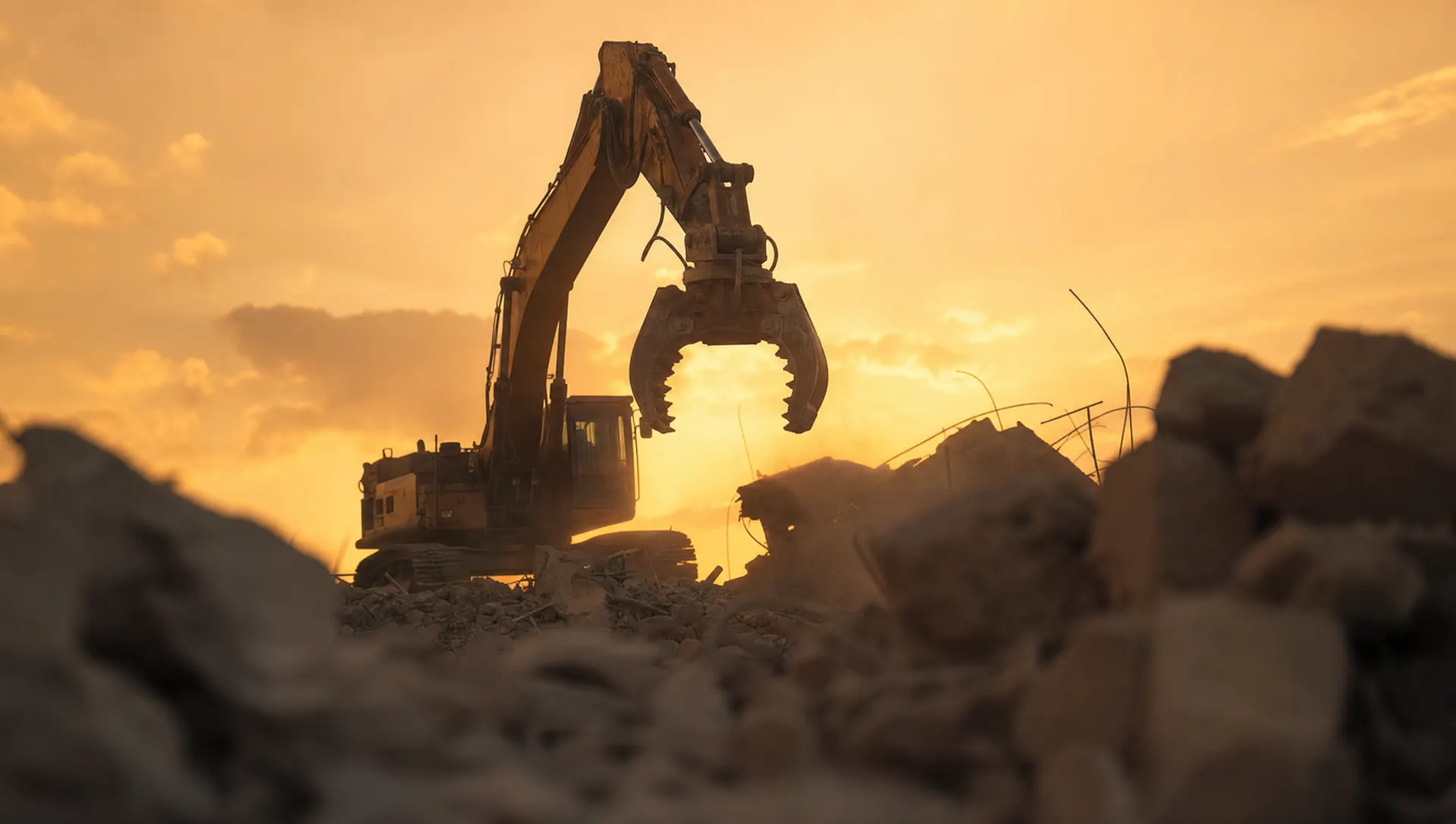
Debris Removal & Hauling in Cape Girardeau, MO
Every demolition job ends the same way: with a pile of material that has to go somewhere. Debris removal and hauling is the part of the work that happens after the tearing-down is done — or sometimes it's the entire job, when what you're dealing with isn't demolition at all, just a property that needs to be cleared of material that's already there.
Cape Demolition handles debris hauling both as part of a larger demolition project and as a standalone service for Cape Girardeau property owners who just need something gone.
We work with homeowners clearing out a property after a move or an estate, contractors who need a job site cleared before the next phase starts, and landlords dealing with whatever a previous tenant left behind. The material is rarely the same twice, and pricing it accurately starts with actually seeing what's there.
What's Included in Debris Removal & Hauling
Hauling sounds simple, but doing it right means more than loading a truck. A typical job includes:
- A property walkthrough, so the volume and type of material is actually understood before a truck ever shows up
- Sorting debris, where it's practical or required — some materials are handled or disposed of separately from general construction debris
- Loading, either by equipment for large volumes or by hand where access is tight
- Hauling the material off the property to the appropriate disposal point
- Coordination on timing, especially when hauling is one step in a larger project and needs to line up with what happens before or after it
- Final site cleanup — raking, sweeping, and leaving the property in usable condition, not just emptier than before
If the debris is tied to demolition work you also need done, it gets scoped as one project. If it's standalone — an old pile of building material, storm debris, or junk that's accumulated on a property — that works too.
The Local Angle: What Actually Piles Up Around Cape Girardeau
Debris hauling around here comes from a few recurring sources. Being a Mississippi River town, Cape Girardeau sees its share of storm activity, and severe weather periodically leaves behind downed trees, damaged outbuildings, and material from structures that didn't hold up — cleanup work that often needs to happen fast, before the next round of weather makes it worse. Rural properties on the edges of town and out toward the surrounding communities tend to accumulate their own piles over the years too — an old collapsed shed, scrap material from a project that never got finished, fencing that's been down for a season or two.
Then there's the steady stream of debris that comes out of interior demolition and remodel work throughout the older neighborhoods north and west of downtown, where renovation projects are common enough that hauling alone — without any actual demolition — is its own regular category of work.
Seasonal timing plays a role too. Spring storm season and the cleanup that follows tends to bring a wave of calls at once, and rural properties out toward the surrounding communities sometimes mean a longer haul to a disposal point than a job inside city limits — something we account for when scoping the job rather than adding as a surprise later.
When to Call for Debris Hauling
Debris hauling gets requested in a range of situations, and it doesn't have to involve demolition at all:
- Right after a demolition project, as the final step of the job
- Cleaning out a property following fire or storm damage
- Clearing an old pile of building material, fencing, or junk before selling or building on a lot
- Post-storm cleanup after a structure or large tree comes down
- Hauling leftover material from a remodel that a contractor doesn't handle
- Clearing out a property between tenants or after an estate, when there's furniture and household debris mixed in with construction material
Cost Factors for Debris Hauling
Hauling costs typically come down to a few factors:
- Volume and weight of the material — a pickup load and a full house's worth of demolition debris are very different jobs
- Type of material — some debris costs more to dispose of properly than general construction waste
- Access — whether a truck can get close to the pile, or material has to be carried out by hand first
- Distance to disposal — how far the material has to travel factors into the total
- Separation requirements — material that has to be sorted by type for proper disposal takes longer to load than a mixed pile that can go straight onto a truck
We look at the volume and the site before quoting, since "a pile of debris" can mean very different things from one property to the next.
Do I need to rent my own dumpster, or do you haul everything?
We handle the hauling — you don't need to arrange a separate dumpster rental unless you specifically want one on-site for an extended project. For most jobs, having a dumpster sit on the property for weeks costs more and takes longer than scheduling a haul-off for when the material's actually ready to go.
Can you haul debris that isn't from a demolition job — like an old junk pile?
Yes. Standalone hauling is common, whether it's leftover building material, storm debris, or things that have just piled up on a property over time. Old fencing, scrap lumber, a collapsed shed that never got cleared — if it needs to leave the property, it's worth asking about.
Is there anything you can't haul?
Certain materials require special handling or disposal rather than standard hauling — we'll tell you upfront if something on your property falls into that category rather than just loading it and figuring it out later. Describing what's in the pile before we arrive helps us plan for it properly.
Get a Free Quote on Debris Hauling
Tell us what needs to go — roughly how much, what kind of material, and whether it's tied to other work. We'll get back to you fast with a straight answer and a free quote.
Got a Structure to Come Down in Cape Girardeau?
Tell us what you're clearing and we'll get back fast with a free, no-pressure quote.